
| North Carolina Should Require NC Railroad Company to
Pay an Annual Dividend and Strengthen Reporting (October 2012) 2012-10
The North Carolina Railroad Company (NCRR) has benefitted from its unique relationship with the State, the corporation's sole shareholder, but the State has not benefitted financially from this relationship. Selling NCRR or the railroad corridor may not be in the best interest of the State because these valuable rail assets and their long-term earnings potential would be lost. The State has limited mechanisms for oversight of NCRR, but changing its corporate structure requires a lengthy and complicated process. The General Assembly should amend state law to strengthen reporting by NCRR; require NCRR to pay a one-time dividend of $15.5 million and, thereafter, an annual dividend to the General Fund; and require NCRR to convey to the State properties not directly related to the railroad corridor so these properties can be sold and the proceeds deposited into the General Fund. |
Executive Summary
Final Report
Presentation
Handout |
 |
Key Ideas from Five Program Evaluation Division Reports on State-Owned Vehicles and Permanent License Plates (June 2012)
2012-08
This report provides a summary of five Program Evaluation Division reports on state-owned vehicles and permanent license plates:
- Inadequate Data and Fleet Information Management Weaken Accountability for North Carolina’s Vehicles (2011-07);
- Motor Fleet Management Uses Best Practices, but Needs Telematics to Strengthen Accountability (2012-02);
- Ineffective Policies and Diffuse Oversight Result in Inefficient Use of State-Owned Vehicles (2012-06);
- Follow-up Analysis of Permanent License Plates Owned by State and Non-State Entities (2011-07-01); and
- Follow-up Report: Reviewing Eligibility for Permanent License Plates would Strengthen State Oversight (2011-07-02)
|
Executive Summary
Full Report
License Plate Legislation
State Fleet Management Legislation |
 |
Follow-up Report: Reviewing Eligibility for Permanent License Plates Would Strengthen State Oversight (May 2012) 2011-07-01
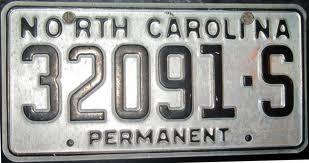
This report addresses concerns about permanent license plates registered to entities not identified as eligible by statute and the many different types of non-state entities eligible for silver license plates. The Division of Motor Vehicles (DMV) also identified obstacles that inhibit its ability to ensure entities applying for permanent license plates qualify under state law. The General Assembly should consider limiting eligibility for permanent license plates to governmental entities and reviewing the basis for issuing plates to non-governmental entities; direct DMV to cancel all permanent plates and reissue them to qualifying entities; amend state law to require registration of all permanent license plates in the name of the eligible entity following a standard naming convention; and authorize DMV to revoke permanent license plates registered to entities that fail to obtain an annual vehicle inspection. |
Executive Summary
Final Report
Presentation
Handout
Legislation |
 |
Contract Agency Vehicle Registration and Titling Services Are Cost Efficient, but Contracts Need Performance Terms (April 2012)
2012-07
The General Assembly directed the Program Evaluation Division to determine the cost-effectiveness of using license plate agency (LPA) contractors to provide vehicle registration and titling services and to evaluate the oversight of these contractors by the Division of Motor Vehicles (DMV). Contractors are a cost-efficient way for the State to provide registration and titling services. However, DMV's oversight of contractors is hindered by lack of coordination, poor communication, and lack of a standardized, performance-based contract. The General Assembly should direct DMV to implement a standardized, performance-based contract; improve oversight and communications; and outsource registration and titling services provided at the two state offices.
|
Executive Summary
Final Report
Presentation
Handout |
| Ineffective Policies and Diffuse Oversight Result in Inefficient Use of State-Owned Vehicles (April 2012)
2012-06
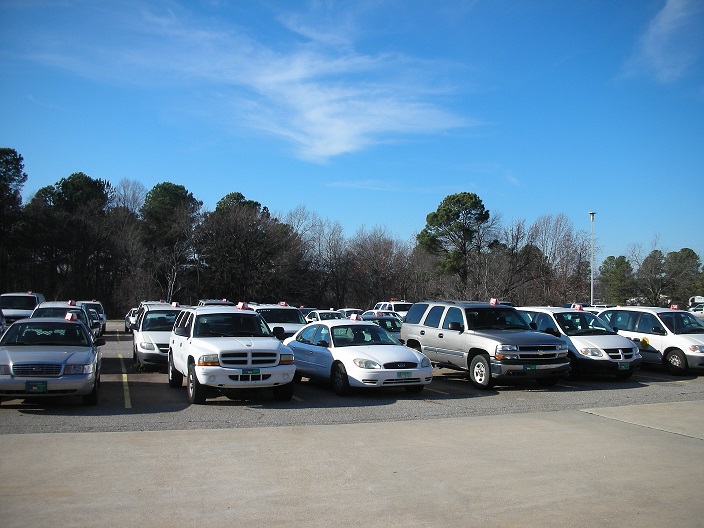
North Carolina agencies and institutions that own 200 or more vehicles have not fully implemented fleet management best practices. Weak and diffuse oversight results in inefficient use of vehicles because no single entity is responsible for ensuring appropriate and efficient use of state-owned vehicles. This lack of statewide oversight limits accountability for state-owned vehicle use. Other states with state fleet management offices demonstrate that centralized supervision of state-owned vehicles improves accountability and operational efficiency. The General Assembly should strengthen supervision of all state-owned vehicles by establishing the Division of State Fleet Management in the Department of Administration to manage passenger vehicles, supervise agencies and institutions that own non-passenger vehicles, and manage the statewide fleet management information system. |
Executive Summary
Final Report
Presentation
Handout
Legislation |
 |
A Three-Year Emissions Inspection Exemption Would Save North Carolina Motorists $9.6 Million (March 2012)
2012-05
The Program Evaluation Division's December 2008 report Doubtful Return on the Public's $141 Million Investment in Poorly Managed Vehicle Inspection Programs recommended a three-year emissions inspection exemption for cars from the three newest model years. A March 2012 joint study by DOT's Division of Motor Vehicles and DENR's Division of Air Quality estimated impacts on atmospheric pollutant levels using two scenarios: a three-year emissions inspection exemption identical to the 2008 recommendation, or a complete elimination of emissions inspections. The joint study recommends the three-year exemption. PED also now finds that the three-year exemption would save North Carolina motorists $9.6 million annually, but would require changes to General Statutes and to the State's Clean Air Act implementation plan. The exemption could take effect as early as January 1, 2014.
|
Executive Summary
Final Report
Presentation
Handout |
 |
Further Reductions to Aviation Programs
Are Possible and an Aviation Management
Authority is Needed (March 2012) 2012-03
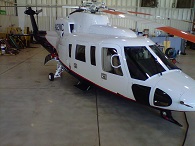
The Department of Transportation's (DOT) helicopter and the State Bureau of Investigation's (SBI) airplanes are underutilized. Alternatives should be explored to eliminate the helicopter and reduce the SBI fleet. In addition, the SBI facility could be eliminated and their airplanes could be moved to the DOT facility. This evaluation also found that consolidation of passenger air service would not result in an improved level of service. Despite improvements in fleet management practices since 2010, central oversight is still needed to ensure efficient and effective use of state aircraft. As recommended in the April 2010 report, the General Assembly should direct the establishment of an Aviation Management Authority in DOT to oversee management of all aircraft owned or operated by the State. |
Executive Summary
Final Report
Presentation |
| Motor Fleet Management Uses Best Practices, but
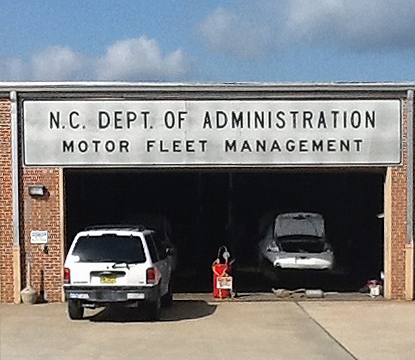
Needs Telematics to Strengthen Accountability (March 2012) 2012-02
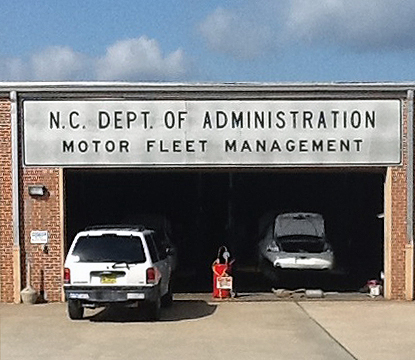
The Division of Motor Fleet Management (MFM) operates in accordance with most fleet management best practices, but the division can improve management and accountability. MFM's reliance on state agencies for management and oversight makes it difficult to hold agencies accountable, and it does not have sufficient information to determine the correct number of passenger vehicles to meet state government needs. Telematics offers opportunities to improve accountability and provide information needed to analyze vehicle utilization. Curtailment of vehicle replacement in recent years has led to an older and less reliable fleet, and recent changes to the rate structure may limit funding for vehicle replacement. With improvements in management and the use of technology, MFM can continue to meet the state government need for passenger transportation services. |
Executive Summary
Final Report
Presentation
Handout
Legislation |
| Inadequate Data and Fleet Information Management Weaken Accountability for North Carolina's Vehicles (December 2011) 2011-07
North Carolina lacks adequate information to determine the appropriate size and mix of state-owned motor vehicles for state government needs. Although state agencies and institutions can provide data on the number, use, and cost of their fleets, the State does not have a central data source to verify the accuracy of this information. State agencies and institutions are not required to collect the necessary data for vehicle utilization assessments. As a result, many do not collect this information at all. This report recommends directing state agencies and institutions to update vehicle registration records for all state-owned vehicles and requiring collection and reporting of vehicle information through a statewide fleet management system. |
Executive Summary
Final Report
Presentation
Handout
Follow-up Summary
Follow-up Report 2011-07-01
Follow-up Presentation |
 |
North Carolina Should Weigh Continued Investment in the Global TransPark Authority and Consider How to Repay the Escheat Fund Loan (April 2011)
2011-02
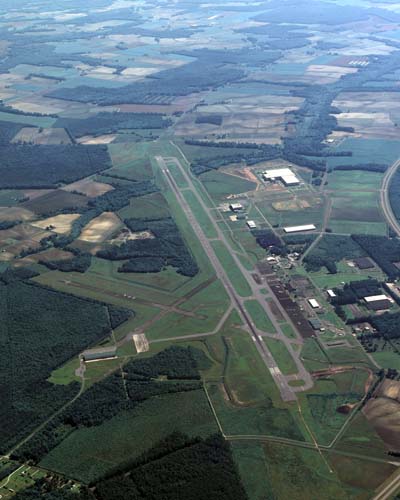
The General Assembly directed the Program Evaluation Division to conduct a comprehensive program and financial review of the Global TransPark Authority and to assess the Authority’s ability to become self-sustaining and repay the Escheat Fund loan. The evaluation found the Authority has made progress towards meeting its mission and goals; however, administrative practices limit its ability to demonstrate results. Current operations do not allow the Authority to be self-sufficient or repay the Escheat Fund Loan, thus responsibility for this debt falls to the state. Moving forward, the General Assembly should establish a repayment schedule for the Escheat Fund debt and choose between two options for the future of the Global TransPark.
|
Executive Summary
Final Report
Presentation
Handouts |
|
Selling 25 Underutilized Aircraft May Yield Up to $8.1 Million and Save $1.5 Million Annually
(April 2010) 2010-04
Eight North Carolina aviation programs operated 72 aircraft and cost $10.8 million in Fiscal Year 2008-09. This evaluation examined the number, use, and effectiveness of state aircraft and revealed concerns about aircraft utilization, efficiency, and management. Of the 72 aircraft, 79% flew less than 200 hours per year. Fractured management contributed to inconsistent practices and policies as well as inefficiencies. To address these concerns, the General Assembly should establish the Aviation Management Authority to oversee management of all aircraft. Based on a three-phase analysis, the report recommends eliminating 25 aircraft and 5 hangars. Proceeds from the sale of aircraft may yield up to $8.1 million and save $1.5 million annually.
|
Final Report
Presentation
Handouts
2010 Follow-up Summary
2010 Follow-up Report 2010-04-01
2010 Follow-up Presentation
2012 Follow-up Summary
2012 Follow-up Report 2012-03
2012 Follow-up Presentation |
 |
Doubtful Return on the Public's $141 Million Investment in Poorly Managed Vehicle Inspection Programs
(December 2008) 2008-12-04
Vehicles registered in North Carolina are subject to two types of inspections: safety inspections examine various mechanical systems and emissions inspections ensure proper functioning of pollution controls. North Carolinians spend $141 million annually on inspections. No evidence exists showing the safety inspection program is effective, it is not possible to determine how much vehicle emissions inspections contribute to the improvement of overall air quality, and program oversight by the Division of Motor Vehicles (DMV) is inadequate. The General Assembly should reevaluate the need for a safety inspection program, consider exempting vehicles from the three newest model years from safety and emissions inspections, and require DMV to manage the programs to ensure results.
|
Executive Summary
Final Report
Presentation
Handouts |
